
For Property Owners
National Standards for the Physical Inspection of Real Estate


When We Say Goodbye: How Units Leave the Program
While we value every property owner partnership, there are several situations in which a subsidized unit or property may leave the CLIHTF program. Sometimes the decision is made by the property owner, sometimes it results from a vacancy or program policy, and in other cases it follows unresolved compliance concerns. Here is a simple explanation of what each type of “goodbye” means.
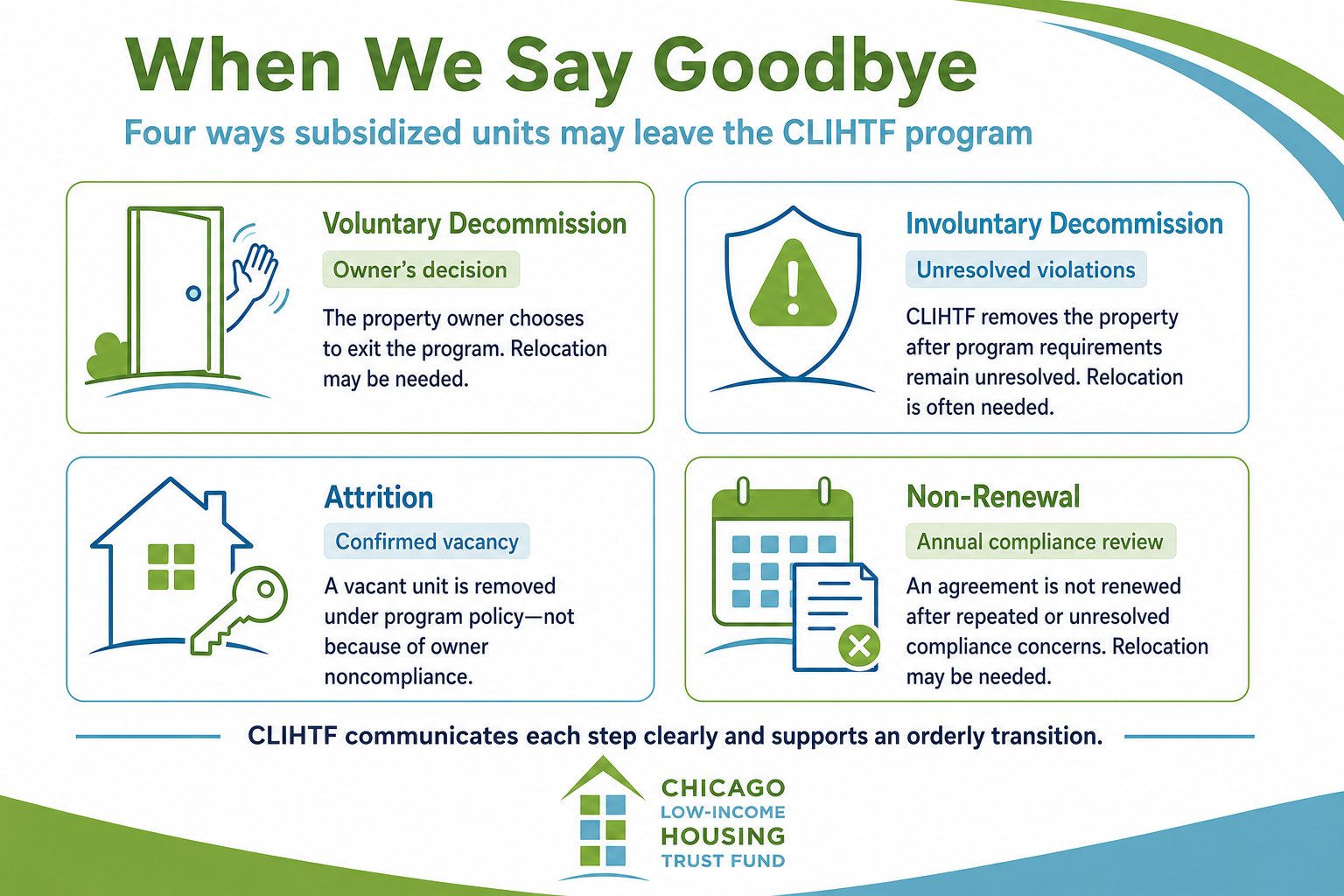
Voluntary Decommission: When an Owner Chooses to Leave
A voluntary decommission occurs when a property owner asks to remove one or more units from the program. After receiving the request, CLIHTF sends a Letter of Decommission through Trust Fund Central (TFC). If the owner does not respond within 30 days, a Notice of Decommission may be issued.
Once the request receives final approval, the property or units are deactivated in CLIHTF systems. Depending on the circumstances, affected tenants may receive relocation notices, and participating service providers may also be notified. For example, an owner may request to remove the subsidized units in a six-unit building because they plan to use the property for a different purpose.
Involuntary Decommission: When Program Requirements Are Not Met
An involuntary decommission is initiated by CLIHTF when a property owner has unresolved violations of the Annual Agreement. This may include repeated failed inspections, a lack of response to required communications, or other serious compliance concerns that remain unresolved after opportunities for correction.
These removals require approval from the CLIHTF Board or Executive Committee. Once approved, an Involuntary Decommission Letter is sent through TFC, and the property is made inactive in CLIHTF systems. If tenants are affected, relocation notices may be provided, and service providers are notified when Special Initiative units are involved. For example, a building with ongoing inspection issues may be removed from the program after the owner does not complete the required corrections.
Attrition: When a Subsidized Unit Becomes Vacant
Attrition applies to certain subsidized units that become vacant on or after January 1, 2025. Unlike other types of removal, attrition is not the result of owner noncompliance. It is a program policy that allows CLIHTF to remove an eligible unit once its vacancy has been confirmed.
The property owner receives an Attrition Letter through the TFC Message tab. If every subsidized unit in a building is affected, an attrition memo may also be uploaded in TFC. The vacant unit is then removed from the program and may be rented at the market rate. Property owners affected by attrition may be included on a referral list for households seeking relocation opportunities. For example, if a subsidized unit in a four-flat becomes vacant, CLIHTF may remove that unit through attrition while the remaining occupied subsidized units continue in the program.
Non-Renewal: When an Agreement Is Not Renewed
Non-renewal generally occurs during the annual review process when a property has an ongoing pattern of noncompliance. Before a final decision is made, the property may be placed on a probationary list, and the owner receives a Risk of Non-Renewal Letter with a 30-day period to address the identified concerns.
If the concerns are not corrected, the CLIHTF Board may approve an Official Notice of Non-Renewal. The property is then decommissioned, and its access to applicable program systems is removed. Tenants may receive relocation support when necessary. For example, a property with repeated compliance concerns may not have its Annual Agreement renewed if the required improvements are not completed within the correction period.

Chicago Low-Income Housing Trust Fund seeks to fund rental subsidies in properties throughout the City of Chicago that will provide safe and well-maintained housing to Chicago’s low-income citizens. It is property owners that apply to the Trust Fund to participate in the Rental Subsidy or Multi-year Affordability through Upfront Investment (MAUI) programs. Property owners then lease units to income-qualified households.
Resources
Department of Buildings Website: https://data.cityofchicago.org/Buildings/Building-Violations/22u3-xenr/data
2025 Fair Market Rent Rates: https://www.huduser.gov/portal/datasets/fmr/fmrs/FY2025_code/select_Geography.odn
Cook County Property Tax Website: https://www.cookcountytreasurer.com/payment.aspx
Open Enrollment (Closed)
Visit the RSP Application Process tab HERE, for more information.
Current Property Owners
If you are a property owner currently participating in the Rental Subsidy Program, you can access the following on this site.
Online Owner Portal
As part of your agreement, you are required to submit certain forms (Exhibits) both when you complete your agreement and throughout the year. These Exhibits are part of an online submission process which eliminates 95% of the paperwork that was required in the past.
Subsidy Payment Release Dates
Please be informed that Trust Fund Subsidy Payments are scheduled for release weekly on Fridays. In the event that a holiday should fall of a Friday, payments will be scheduled for release on Thursday.

Learn more about the Rental Subsidy Program application process.
Click Here to view the Owners Portal Manual